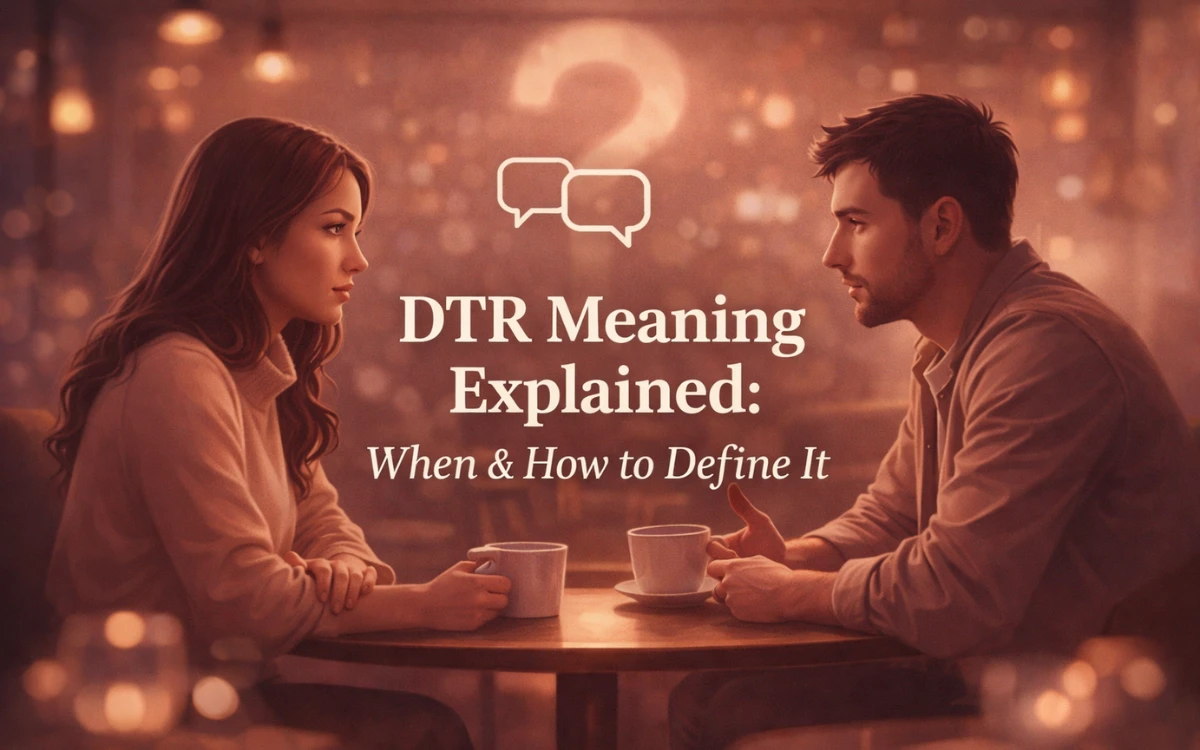
DTR stands for “Define the Relationship.” It’s the conversation where two people get honest about what they actually are to each other — are you just dating, or are you officially together?
If you’ve been seeing someone and you’re not sure what to call it, a DTR is exactly what you need.
In 2026, this conversation is more important than ever — because modern dating is blurry, confusing, and full of mixed signals.
What Does DTR Mean and Why Is Everyone Talking About It
DTR = Define the Relationship.
It’s the moment you stop guessing and start knowing.
You’ve been texting every day. You’ve gone on multiple dates. But neither of you has said what this actually is. That uncomfortable in-between space? That’s exactly where the DTR lives.
Why people are talking about it:
- Dating apps made it easier to meet people but harder to commit
- The “talking stage” can go on forever without a DTR
- People want clarity but nobody wants to be the first to ask
- Without it, one person often catches feelings while the other stays casual
The DTR isn’t just a trend. It’s a necessary checkpoint in every modern relationship.
Think of it like a GPS recalculation. You’ve been driving together — but do you actually agree on the destination?
The Real Reason the DTR Conversation Feels So Scary
Let’s be honest. Most people avoid the DTR because they’re afraid of one thing:
The answer.
What if they say they don’t see it going anywhere? What if it ruins the “good thing” you have going? What if you come across as too needy or too intense?
These fears are real — but they’re also keeping you stuck.
Here’s the truth:
Clarity is always better than comfort.
The DTR feels scary because you’re about to be vulnerable. You’re handing someone your honest feelings and waiting to see what they do with them.
But here’s what most people get wrong — they think the DTR is about getting a yes. It’s not.
It’s about knowing where you stand so you can make an informed decision about your own life.
| Fear | Reality |
| “I’ll seem desperate” | Vulnerability is actually attractive |
| “It’ll ruin things” | Confusion ruins things more |
| “It’s too soon” | Staying unclear too long costs you more |
| “They’ll pull away” | The right person won’t run from honesty |
More Post: JFC Meaning in Text (2026): Usage & Alternatives
Courage in this conversation isn’t weakness. It’s one of the most emotionally mature things you can do.
How to Know When It’s the Right Time to DTR
Timing matters. You don’t want to DTR on the second date — but you also can’t wait forever.
Signs it’s time to have the talk:
- You’ve been on 4 or more dates consistently
- You’re spending weekends together regularly
- You’ve met some of their friends or family
- You’ve stopped swiping on dating apps (or feel guilty when you do)
- You’re turning down other opportunities because of this person
- One of you has started using the word “we”
Signs it might be too soon:
- You’ve only hung out a handful of times
- The relationship is mostly digital — texting but not meeting
- You feel emotionally unsettled or unsure yourself
- You’re doing it out of anxiety, not genuine readiness
A good rule of thumb for 2026: if you’ve been consistently seeing someone for 4 to 8 weeks and things feel natural and progressive — it’s probably time.
Ask yourself this one question first:
“Do I actually want to be in a committed relationship with this specific person — or do I just want a label?”
If the answer is yes to the first part, you’re ready.
More Post:Ligma Meaning Explained: Origin, Meme & Usage
How to Have the DTR Talk Without Killing the Vibe
This is where most people overcomplicate it. The DTR doesn’t have to be a formal sit-down with a PowerPoint presentation.
The golden rules:
- Do it in person — never over text
- Choose a calm, private setting — not a loud bar
- Come in with no ultimatums
- Speak from your own feelings — use “I” statements
- Go in without expectations on the outcome
What to actually say:
For anyone ready to open the conversation:
“Hey, I’ve really enjoyed the time we’ve been spending together. I just want to be honest — I’m at a point where I’m not really interested in keeping things casual. I wanted to check in and see where you’re at.”
Simple. Real. Zero pressure.
What NOT to do:
- Don’t text it
- Don’t bring it up during an argument
- Don’t say “we need to talk” without context (instant panic mode)
- Don’t make the other person feel cornered or interrogated
- Don’t frame it as a test they need to pass
Remember: The goal isn’t to win. The goal is to know.
Vulnerability + honesty + zero pressure = the best DTR you can have.
What Happens After the DTR — The Outcomes You Need to Prepare For
There are really only three outcomes after a DTR:
1. You’re both on the same page ✅
This is the best case. You both want the same thing, you define the relationship, and you move forward as an official couple. Celebrate this — it doesn’t always go this smoothly.
2. One of you isn’t ready yet 🕐
This doesn’t automatically mean it’s over. It might mean you need a little more time. But pay attention — how long is the question. If someone consistently pumps the brakes for months with no movement, that’s an answer too.
3. You want different things ❌
This is hard. But it’s also the most important outcome to know. Because now you can make a real decision instead of wasting months in situationship limbo.
A “no” in a DTR isn’t rejection. It’s information.
Knowing what someone can’t offer you is just as valuable as knowing what they can. It sets you free to find someone who is actually available — emotionally, intentionally, and fully.
Common DTR Mistakes That Send the Wrong Message
Even with good intentions, people mess up the DTR. Here’s what to avoid:
Mistake 1: Waiting too long
The longer you wait, the more emotionally invested one person gets while the other stays comfortable and uncommitted. Don’t let weeks turn into months of ambiguity.
Mistake 2: Doing it over text
A text DTR tells the other person this conversation isn’t important to you. It also removes tone, eye contact, and genuine connection from the most important conversation in your early relationship.
Mistake 3: Leading with an ultimatum
“Either we’re official or I’m done” is a threat, not a conversation. It creates defensiveness, not honesty.
Mistake 4: Ignoring the signs that were already there
Sometimes the DTR has already happened — through actions, consistency, and behavior. If someone has been showing up for you every single week, they’re telling you something. Read the room before you panic.
Mistake 5: Needing a perfect response
People get nervous. They need time to process. If someone doesn’t have the exact words in the moment, give them space to think. A real answer is better than a pressured one.
Quick Reference — DTR Do’s and Don’ts:
| Do This ✅ | Avoid This ❌ |
| Speak in person | Text or DM the DTR |
| Use “I feel” statements | Issue ultimatums |
| Stay calm and open | Bring it up mid-argument |
| Accept any honest answer | Push for the answer you want |
| Know your own boundaries | DTR from a place of fear |
More Posts:Snowball Kiss Meaning: Definition & Viral Origin
The DTR is not the end of something — it’s the beginning of something real.
FAQ
What does DTR stand for?
DTR stands for Define the Relationship. It’s a conversation between two people to clarify what they are — casual, exclusive, or officially dating.
When should you DTR?
Most dating experts suggest 4 to 8 weeks of consistent dating is a reasonable window to have the DTR — when both people have enough context but before emotional investment becomes unbalanced.
Can a woman initiate the DTR?
Absolutely. In 2026, anyone can start this conversation. The key is approaching it with honesty, confidence, and no pressure on the other person.
What if the DTR doesn’t go well?
That’s okay. A difficult outcome is still a clear outcome. It allows both people to move forward with full information rather than staying stuck in uncertainty.
Is DTR only for romantic relationships?
Primarily yes — but the concept of defining expectations can apply to any relationship where clarity is needed, including close friendships or situationships.
Conclusion
The DTR is one of the most important — and most avoided — conversations in modern dating.
In 2026, with more options and less clarity than ever, having this conversation is an act of self-respect as much as it is honesty with someone else.
Stop guessing. Start knowing. You deserve a relationship that is clearly and confidently defined.

At Romancesaba.com, we’re Soulmates with Romance. Our admin Shares Heartfelt Ideas on Love, Flirting Tips, and Dreamy Destinations to spark Deep Connections and Unforgettable Romantic Journeys.