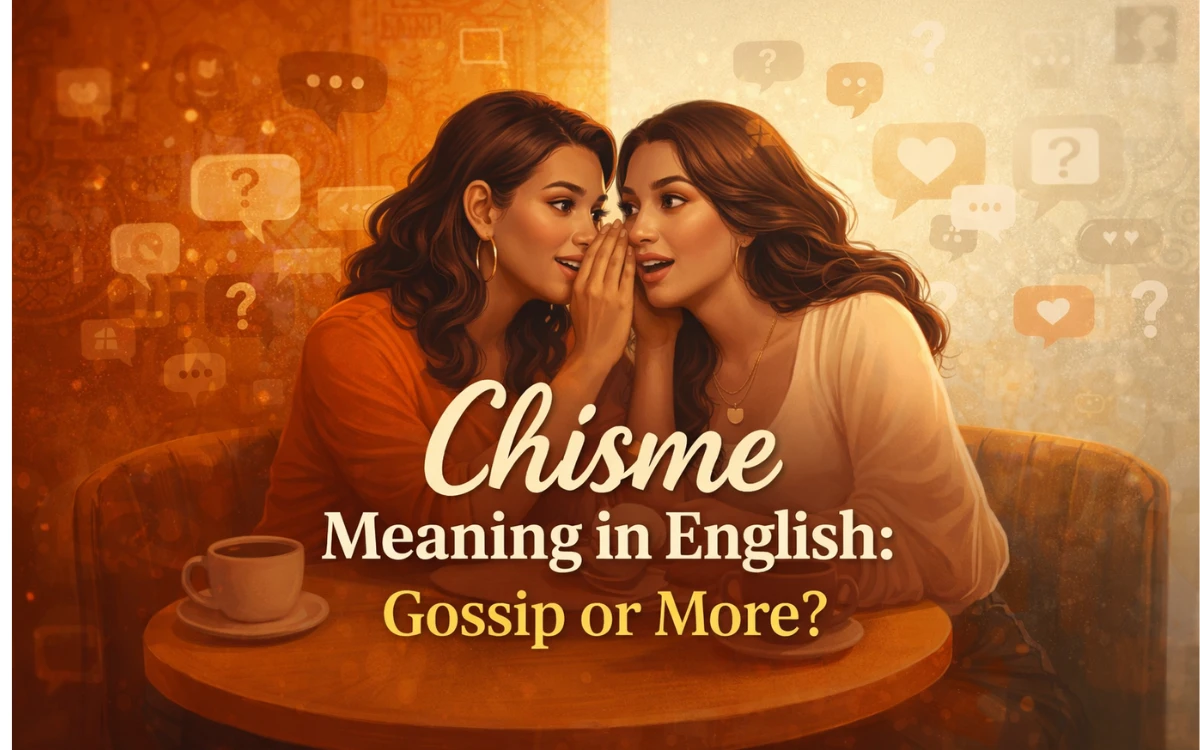
Chisme means gossip in Spanish — a rumor, a juicy story, or a piece of news shared between people, usually about someone else’s personal life.
It’s one of the most culturally loaded words in the Spanish language, and in 2026, it’s more popular than ever — especially across US Latino communities.
What Does Chisme Mean in Spanish and English?
Chisme (pronounced chees-meh) is a Spanish masculine noun.
Its core meanings in English:
| Spanish | English Equivalent |
| Chisme | Gossip / Rumor |
| Un chisme | A piece of gossip |
| Chismes | Gossip (plural) / Rumors |
| Chisme (colloquial) | Thing / Thingy / Thingamajig |
More Posts:Katz Meaning: The True Origin, History, and Significance of the Name Katz
It has two distinct uses:
1. Gossip / Rumor The most common meaning. It refers to talk about other people’s lives — their relationships, drama, secrets, or mistakes.
“¿Oíste el chisme?” — “Did you hear the gossip?”
2. A Nameless Object (Colloquial) In casual speech, chisme also means a vague “thing” or “thingy” when you can’t remember the name of an object.
“Pásame ese chisme.” — “Hand me that thing.”
How Chisme Is Used in Everyday Latin American and US Latino Conversations
In daily life, chisme flows naturally in conversations — at family gatherings, in text messages, at work, and on social media.
Common ways you’ll hear it:
- “Tengo un chisme” — I have a piece of gossip
- “¡Cuéntame el chisme!” — Tell me the gossip!
- “Eso es puro chisme” — That’s nothing but gossip
- “No me gusta el chisme” — I don’t like gossip
In US Latino culture, chisme shows up everywhere:
- Family WhatsApp groups
- TikTok and Instagram comment sections
- Telenovela fan pages
- Workplace lunch breaks
It’s not always negative. Among close friends, sharing chisme is a form of bonding and trust.
Chisme vs Gossip — Are They Really the Same Thing?
On the surface, yes. But dig deeper and you’ll find real differences.
| Chisme | Gossip | |
| Tone | Warm, social, cultural | Often negative or judgmental |
| Context | Community bonding | Can be seen as harmful |
| Emotional weight | Neutral to playful | Usually carries a negative label |
| Cultural role | Deep-rooted social tradition | Considered a bad habit |
More Post: JFC Meaning in Text (2026): Usage & Alternatives
Gossip in English carries a mostly negative connotation. People say “don’t gossip” as a moral warning.
Chisme in Spanish is more neutral and even affectionate. Saying “¡Ay, qué chismosa!” to a friend is often said with a smile — not as a serious insult.
This is a key cultural distinction that English alone cannot fully capture.
What Does Chismoso or Chismosa Mean and How Is It Different from Chisme?
Chismoso (masculine) and chismosa (feminine) describe a person who loves to gossip.
Think of it as the difference between:
- Chisme = the gossip itself (the story or rumor)
- Chismoso/Chismosa = the person who spreads it
Examples:
- “Ella es muy chismosa.” — She is very gossipy.
- “No seas chismoso.” — Don’t be a gossip.
- “Mi vecina es la chismosa del barrio.” — My neighbor is the neighborhood gossip.
In 2026, chismosa has been reclaimed humorously on social media. Many creators proudly call themselves “chismosas” as a fun, self-aware label — not a shameful one.
It signals: “I love the tea and I’m not hiding it.”
Why Chisme Is More Than Just Gossip — The Cultural Role It Plays
Chisme is a social institution in Latin culture.
It has always been a way for communities — especially women — to share important information, warn each other about danger, and stay connected.
Chisme serves real social functions:
- Building trust between friends and family
- Spreading community news before digital media existed
- Processing emotions about shared experiences
- Reinforcing social norms — what’s acceptable and what’s not
Anthropologists and cultural experts recognize that gossip in Latin communities is not just idle talk. It’s a social glue.
In the US, Latino media, podcasts, and influencers have turned chisme into content. Shows, YouTube channels, and TikTok pages built entirely around chisme have millions of followers in 2026.
Chisme is culture. It’s connection. It’s community.
Common Chisme Phrases and Sentences You’ll Actually Hear in Real Life
Here are the most used chisme expressions in real conversations:
Everyday Phrases:
- “Tengo chisme” — I’ve got gossip
- “¿Ya supiste el chisme?” — Did you already hear the gossip?
- “Ese chisme no es cierto.” — That gossip isn’t true.
- “No me metan en sus chismes.” — Don’t drag me into your gossip.
- “Puro chisme” — Nothing but gossip / All rumors
Slang & Social Media Phrases in 2026:
- “Spill the chisme” — A mix of English and Spanish used by US Latinos
- “No hay chisme” — There’s no tea / Nothing to report
- “Modo chismosa activado” — Gossip mode activated
These Spanglish blends are especially common among Gen Z and Millennial Latinos in the United States — a sign of how chisme has evolved into a cross-cultural phenomenon.
FAQ
What is the meaning of chisme in English?
Chisme means gossip, rumor, or a piece of news about someone. It can also colloquially mean a “thing” or “thingy” when referring to an unnamed object.
Is chisme a bad word?
No. Chisme is not a bad word. It is a neutral to informal Spanish noun. However, depending on context, it can describe negative behavior like spreading harmful rumors.
What does chismoso mean?
Chismoso (or chismosa for females) means a gossipy person — someone who loves to spread or listen to gossip.
Is chisme used in the United States?
Yes. Chisme is widely used among US Latino communities, especially in states like California, Texas, Florida, and New York. In 2026, it’s also popular in Spanglish culture and social media content.
What is the plural of chisme?
The plural form is chismes, meaning multiple pieces of gossip or rumors.
More Post:YNS Meaning in Text: You’re Not Slick Explained
Conclusion
Chisme is far more than just gossip — it’s a living, breathing part of Latino culture and identity. Whether it’s a spicy rumor, a nameless object, or a label worn with pride, this word carries deep meaning. In 2026, chisme continues to grow beyond its roots — from abuelita’s kitchen table straight to your For You Page.

At Romancesaba.com, we’re Soulmates with Romance. Our admin Shares Heartfelt Ideas on Love, Flirting Tips, and Dreamy Destinations to spark Deep Connections and Unforgettable Romantic Journeys.